
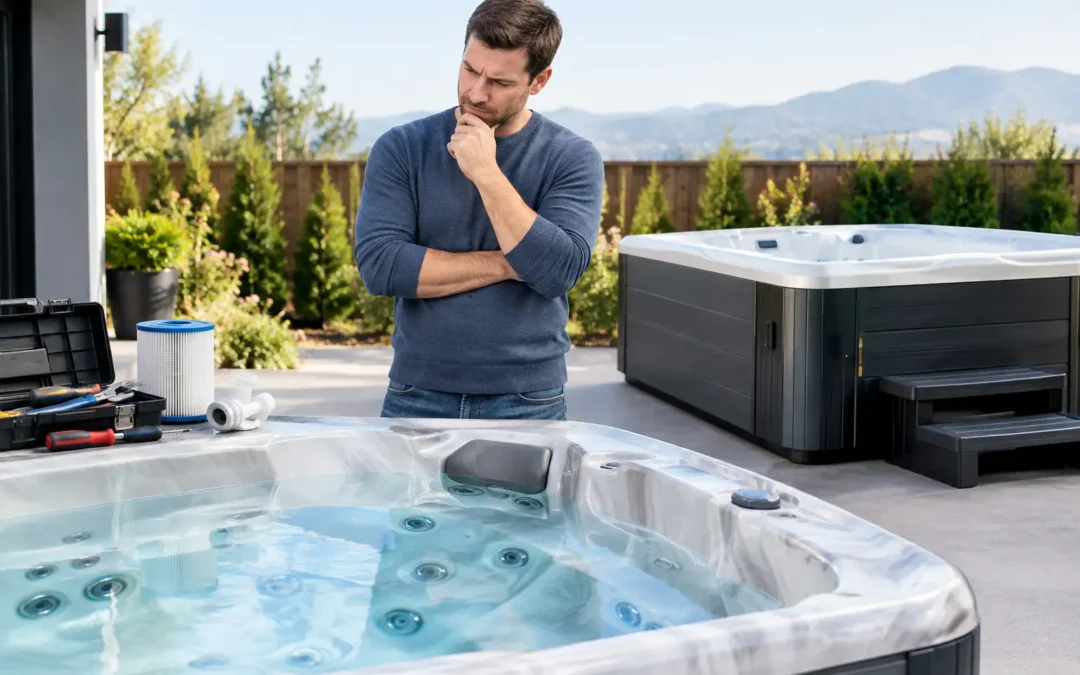
A hot tub that stops heating just as the weather turns colder is more than an inconvenience. It can leave you weighing up hot tub repair or replacement, often before you know what has actually failed or what the bill may look like. The right answer is rarely as simple as choosing the cheapest immediate option. It depends on the age and condition of your spa, the nature of the fault, the availability of parts and what you want from it over the next few years.
For many owners across Sussex, Hampshire, Kent and Surrey, a professional assessment is the sensible first step. A well-made hot tub can offer many years of enjoyable use with the right servicing and care. Equally, there comes a point where continuing to repair an older model costs more in energy, time and frustration than investing in a newer, more efficient spa.
When hot tub repair is the sensible choice
A single fault does not mean your hot tub has reached the end of its life. Pumps, heaters, control panels, seals and sensors are working components, and some will eventually need attention. If the shell, cabinet and pipework are sound, a targeted repair can be excellent value.
Repair is usually the stronger option when the hot tub is relatively modern, has been serviced regularly and has otherwise performed reliably. Replacing a worn circulation pump or a faulty heater can restore normal operation without the cost and disruption of changing the whole unit. This is particularly true where genuine replacement parts are available and the fault has been clearly diagnosed.
Water quality can also create problems that look more serious than they are. Poor water balance may lead to cloudy water, scale on components, reduced jet performance or heater issues. In these cases, correcting the chemistry and servicing the affected equipment may prevent further damage. It is a good reminder that regular maintenance protects both the bathing experience and the value of your hot tub.
A repair should also be considered if your existing spa still suits your household. Perhaps it fits neatly on your patio, has the seating layout your family likes and provides the hydrotherapy features you use most. Replacing it solely because one component has failed may not make financial sense.
Signs hot tub replacement may offer better value
There are occasions when a repair simply delays a bigger decision. An older hot tub with repeated faults can become expensive to own, even if each individual call-out seems manageable. If one issue follows another – a heater this season, a pump next season and a control system shortly afterwards – it is worth looking at the total cost rather than treating each repair in isolation.
The condition of the shell and plumbing matters greatly. Surface scratches can often be lived with, but structural shell damage, persistent leaks in inaccessible pipework or a badly deteriorated cabinet may make replacement the more practical route. Leaks can be especially time-consuming to trace, and repairing them may involve removing panels, insulation or equipment before the true cause is found.
Parts availability is another key consideration. Older or discontinued models can be difficult to support when original components are no longer made. Compatible parts are sometimes possible, but not in every situation. A reputable technician should explain whether a repair is expected to be durable or whether it is a short-term solution with more uncertainty attached.
Energy use deserves attention too. Older hot tubs may have less effective insulation, inefficient pumps and dated control systems. In the British climate, where a spa works hard to hold temperature through cool and wet months, these differences can show up in running costs. A modern, well-insulated hot tub may cost more upfront, but it can offer better heat retention, more reliable controls and lower day-to-day energy consumption.
Hot tub repair or replacement: the costs to compare
The repair quotation is only one part of the decision. Ask what it includes: diagnosis, labour, parts, VAT and any follow-up work needed once the spa is running again. It is also reasonable to ask about the expected lifespan of the replacement component and whether related parts are showing signs of wear.
Then compare this with the full cost of replacement. This should include the new hot tub, delivery, positioning, electrical preparation where required, removal of the old spa if needed and an appropriate cover or accessories. A lower purchase price is not always better value if the hot tub lacks insulation, dependable support or the features that make ownership enjoyable.
A useful rule of thumb is to look beyond one repair. If the cost of repairing an ageing hot tub is becoming a significant proportion of the price of a suitable replacement, and further faults are likely, replacement deserves serious consideration. However, an expensive repair on a high-quality, relatively young spa may still represent good value, particularly when the rest of the unit is in excellent condition.
It also depends on how you use your hot tub. A family that enjoys it several times a week may benefit more from the confidence and efficiency of a new model. For an owner who uses their spa occasionally and is happy with its performance, a carefully completed repair could be the more sensible investment.
Do not overlook safety and the cause of the fault
Electrical faults, tripping circuits, burning smells, visible water around equipment or repeated overheating should never be treated as a DIY job. Turn off the power at the isolator and arrange a qualified inspection. Water and electricity are not a combination to guess at.
The same applies to substantial leaks. Continuing to run a hot tub with a falling water level can damage pumps and heaters, turning a contained repair into a larger one. Taking a few photographs, noting when the issue started and recording any error messages can help a technician diagnose the fault more efficiently.
It is worth asking why the component failed, not only whether it can be replaced. A heater may have been affected by poor flow, a pump may be strained by a blocked filter, or a control problem may be linked to moisture ingress. Solving the underlying cause gives a repair a far better chance of lasting.
What a new hot tub can change
Replacement is not only about avoiding repair bills. It can be an opportunity to choose a spa that better matches the way you live now. You may want additional seating for family and friends, deeper therapy seats, easier access, quieter operation or a layout that makes better use of your garden.
Modern hot tubs can also bring improvements in insulation, filtration, water care options and energy management. These features do not remove the need for regular checks and servicing, but they can make ownership simpler and more economical over time. For homeowners planning to stay in their property, a new hot tub can be a long-term addition that supports relaxation, entertaining and everyday wellbeing.
At Kiwi Spas, the aim is to give owners clear, practical advice rather than push a replacement where a repair will do. An experienced assessment can identify the fault, explain the likely cost and help you compare the realistic options for your particular model.
Make the decision with a clear picture
Before approving work or shopping for a replacement, gather the basic facts: the age and model of the hot tub, its service history, the current fault, the condition of the shell and cabinet, and the cost of any previous repairs. That information makes it easier to judge whether you are restoring a reliable spa or repeatedly spending on one that is becoming harder to maintain.
A good hot tub should be a place to switch off, not another household worry. Whether a considered repair keeps your favourite spa working well or replacement gives you a more efficient start, the best choice is the one that delivers dependable enjoyment and value for the years ahead.