
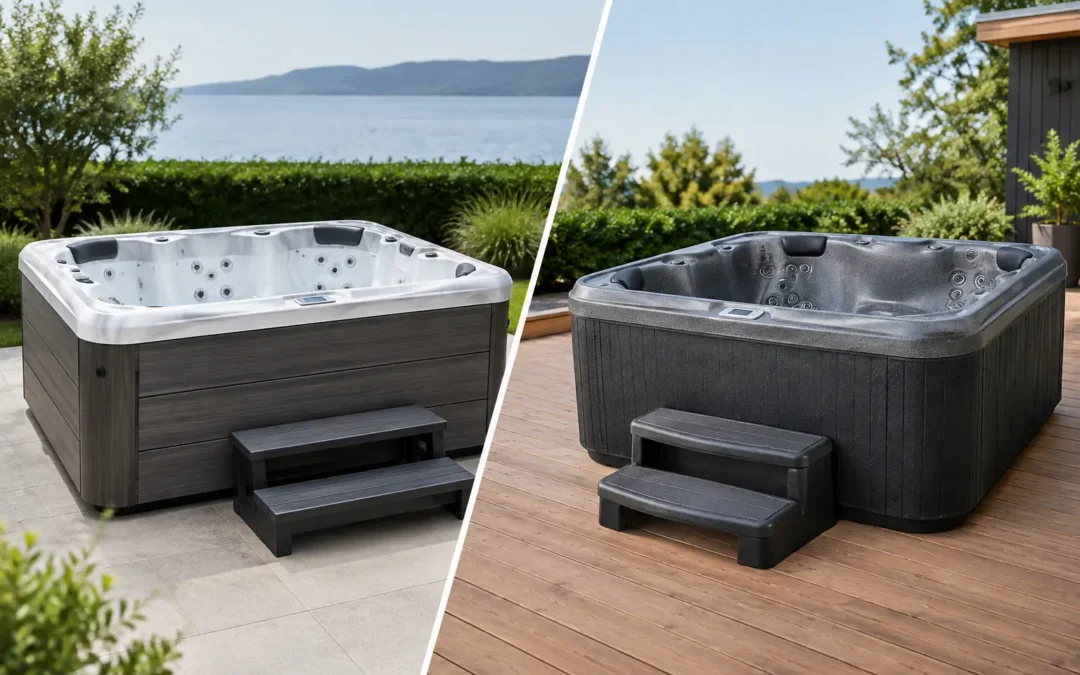
A hot tub can look similar in a showroom or online, yet the material and construction beneath the surface can make a meaningful difference to comfort, heat retention, maintenance and long-term value. If you are deciding between an acrylic or rotomoulded hot tub, the right answer depends less on which is universally ‘best’ and more on how you plan to use it, where it will sit and what you expect from ownership over the years.
For many homeowners across Sussex, Hampshire, Kent and Surrey, an acrylic model is the better fit for a permanent garden spa experience. A rotomoulded model, meanwhile, can be an excellent lower-cost, practical option for smaller spaces, simpler requirements or a first hot tub. Here is how to make the choice with confidence.
Acrylic or Rotomoulded Hot Tub: The Main Difference
An acrylic hot tub has a formed acrylic shell, usually supported by a substantial frame and enclosed within cabinet panels. It is typically fitted with layers of insulation, purpose-designed seating, multiple jets and more sophisticated controls. This is the style most people picture when they think of a luxury garden hot tub.
A rotomoulded hot tub is made from a single piece of rotationally moulded plastic. The shell and cabinet are effectively one unit, creating a tough, lightweight and uncomplicated spa body. Its seats tend to be more moulded and upright, while jet counts and control systems are often simpler.
Neither construction is automatically good or bad. The important question is whether the hot tub’s design matches your household, garden and priorities.
Comfort and Hydrotherapy
Comfort is usually where an acrylic hot tub pulls ahead. Acrylic shells allow manufacturers to create more detailed contours, including loungers, deep bucket seats, varied seat heights and dedicated therapy positions. If several people will use the tub, those seating options matter. A couple may want a reclining lounger, while family members and guests may prefer different depths and jet arrangements.
Acrylic models also commonly offer more jets, with adjustable flow and targeted placement for the back, shoulders, legs and feet. More jets do not automatically mean better hydrotherapy – pump power, plumbing design and jet positioning count too – but a well-designed acrylic spa offers greater scope to tailor the massage to the person using it.
Rotomoulded hot tubs are comfortable enough for a relaxed soak, but their one-piece construction limits how sculpted the seating can be. They are generally best for straightforward relaxation rather than a highly personalised hydrotherapy experience. If managing muscle tension, regular recovery after exercise or deeper massage is high on your list, it is worth sitting in both styles before choosing.
Heat Retention and Running Costs
The British climate makes insulation a major consideration. A hot tub used throughout the year needs to hold its heat well, particularly through colder, wetter months and frosty evenings.
Acrylic hot tubs are often built with more comprehensive insulation around the shell, plumbing and cabinet. Combined with a good-quality, well-fitting cover, this can help reduce heat loss and make year-round use more economical. Higher-spec models may also include insulated bases and carefully designed equipment areas to protect components from the elements.
Rotomoulded spas can be insulated, but their insulation is commonly less extensive. Some use foam insulation within the shell or cabinet space, while others rely more heavily on the cover to retain warmth. This does not mean every rotomoulded tub will be expensive to run, but the difference is worth examining closely. Ask how the particular model is insulated rather than relying on a broad product label.
Your actual energy costs will also depend on how often you use the spa, its water temperature, the condition of the cover, wind exposure and whether the tub is positioned in a sheltered spot. A poorly fitted cover can undermine the efficiency of either type.
Durability and Appearance
Acrylic hot tubs generally offer the more polished, premium appearance. Their glossy shells are available in a wider choice of colours and finishes, with coordinated cabinets that can complement decking, paving or a landscaped garden. The surface is designed to be smooth, easy to wipe down and pleasant to sit against.
With sensible water care and regular cleaning, an acrylic shell can remain attractive for many years. However, it should be treated with care during delivery and installation. The shell is durable, but it is not designed to be dragged across a patio or handled roughly.
Rotomoulded tubs are extremely tough. Their dense plastic construction is well suited to busy households, holiday properties or situations where easy handling is a priority. The finish is usually more matte and functional than glossy. Some owners prefer that unfussy look; others find an acrylic spa better suited to a permanent garden setting.
One advantage of rotomoulded construction is that minor marks can often be less noticeable than they would be on a shiny acrylic surface. On the other hand, colour and styling choices are normally more limited.
Installation and Garden Access
Before falling in love with a particular design, consider the journey from the road to the final position. This can be one of the clearest deciding factors between the two types.
Rotomoulded tubs are generally lighter and easier to manoeuvre through narrow side access, gates or awkward garden layouts. Depending on the model and site, this may avoid the need for lifting equipment. Their lower weight can also make them appealing where a customer wants a more flexible installation, although every hot tub still needs a sound, level base.
Acrylic hot tubs are heavier, especially once you account for the frame, insulation and equipment. Many are delivered on their side and carefully moved into position, but tight access may require a crane lift or other planned solution. This is not a reason to rule out an acrylic model. It simply means assessing access early, rather than treating it as an afterthought.
Whichever type you choose, the filled weight is substantial. A level concrete pad, purpose-built base or suitably engineered decking is essential. You will also need a safe electrical supply installed by a qualified professional, plus enough room to remove the cover and reach the equipment panel for servicing.
Price and Long-Term Value
A rotomoulded hot tub is often the more affordable route into hot tub ownership. Its simpler manufacture, lower weight and reduced feature set can make the purchase price noticeably lower. For someone who wants warm water, a few jets and an uncomplicated place to relax at the end of the day, that can represent very good value.
An acrylic hot tub usually costs more initially, but it can provide greater comfort, insulation, jet performance and visual appeal. It may also be a stronger choice for households planning frequent, year-round use. The value is not just in the number of features. It is in whether those features will make you use the hot tub more often and enjoy it for longer.
When comparing prices, look beyond the headline figure. Check what is included: cover, steps, lighting, water-care equipment, delivery, installation support, warranty and after-sales service all influence the real cost of ownership. A competitively priced tub without reliable technical support can become less of a bargain when it needs attention later.
Maintenance: Similar Essentials, Different Expectations
Both acrylic and rotomoulded hot tubs need the same fundamentals: regular water testing, sanitiser, filter cleaning, balanced water chemistry and periodic water changes. The material does not remove the need for routine care.
Acrylic surfaces are smooth and easy to clean, while rotomoulded shells are highly forgiving and resilient. In either case, use products intended for hot tubs and avoid household cleaners that can create foam, affect water balance or damage surfaces.
The better question is not which type has zero maintenance, because neither does. Ask whether you will have dependable help when you need it. Kiwi Spas supports customers beyond delivery, with servicing, repairs, genuine parts and practical advice that helps protect a long-term investment.
Which Type Suits Your Home?
An acrylic hot tub is likely to suit you if you want a permanent garden feature, varied and comfortable seating, stronger hydrotherapy options and the reassurance of better insulation for regular use. It is especially well suited to couples and families who expect the spa to become part of their weekly routine through every season.
A rotomoulded hot tub may be the smarter choice if your budget is tighter, garden access is restricted, you prefer a simpler setup or you want a compact spa mainly for occasional relaxation. It can also be a sensible first purchase if you are unsure how much you will use a hot tub.
There are exceptions. A high-quality rotomoulded model may suit an active household better than a basic acrylic one, and a carefully selected acrylic tub can be excellent value when it combines efficient running costs with the features you genuinely want. Compare individual models, not just materials.
The most helpful next step is to think about a typical winter evening, not just a sunny showroom visit. Consider who will use the hot tub, how often you want to step in, what access to your garden is like and how much support you want after installation. The right spa is the one that feels easy to own as well as wonderful to use.