
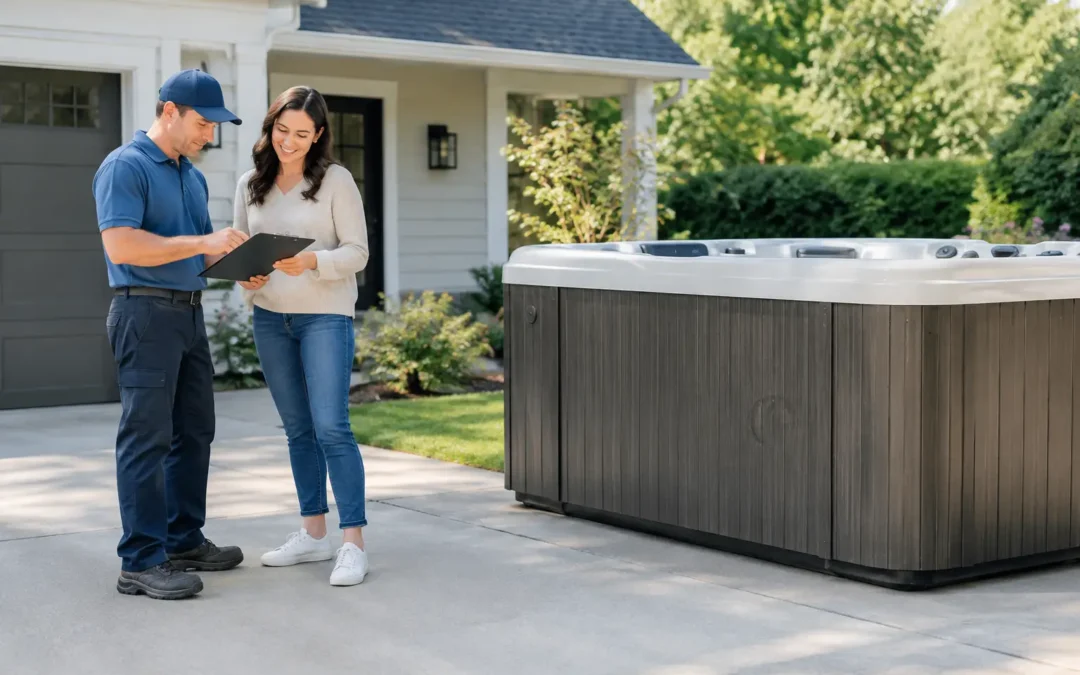
A new hot tub should arrive with excitement, not a last-minute worry that it will not fit through the side gate. Before delivery day, a little measuring and preparation can prevent delays, extra costs and difficult decisions at the kerb. This hot tub delivery access checklist will help you assess the route from the road to your chosen location, so your installation can get off to the right start.
Start with the delivery route, not the patio
It is easy to focus on where the hot tub will sit, but the journey to that spot matters just as much. A hot tub is delivered on its side or end, often using specialist handling equipment. That means the delivery team needs a clear, safe route from the delivery vehicle to the final position.
Walk the full route yourself, starting at the nearest practical parking point. Consider driveways, front gates, side passages, garden gates, paths, steps and changes in level. The shortest route is not always the most suitable one. A longer route with a firm, wide path may be safer than a narrow shortcut around a tight corner.
Take photographs and measurements before your delivery is booked. They are particularly useful if you need advice from the retailer or delivery team. At Kiwi Spas, we are here to help customers plan ahead, because a well-prepared site makes delivery safer for everyone.
Measure every pinch point carefully
The narrowest point usually determines whether a standard ground-level delivery is possible. Measure the clear width of every gate, passage and gap along the route, not just the opening that looks most restrictive.
Remember to account for gate posts, hinges, drainpipes, exterior lights, overhanging roofs and low branches. A gate may look wide enough when open, yet lose valuable centimetres because of its hinges or latch. If a gate can be temporarily removed safely, this may create the access needed, but it should be agreed and arranged in advance.
Height matters too. Check car ports, archways, low eaves, pergolas and tree canopies. The hot tub may need to be manoeuvred upright during delivery, so clearance above the route can be as relevant as width.
Measurements should be accurate and written down. Avoid estimating by paving slabs or fence panels. Use a tape measure, and measure at ground level as well as higher up where an obstacle may narrow the route. Your chosen model’s dimensions and delivery orientation will affect the space required, so always confirm the access requirements for your specific hot tub.
Check corners and turns
A wide path can still cause problems if it leads into a sharp right-angle turn. Look at each corner on the route and consider the space available to swing a large item around it. Raised beds, brick walls, garden furniture and wheelie bins can all make a manageable turn difficult.
Clear movable items well before the delivery team arrives. This includes pots, toys, garden ornaments, hose reels and outdoor furniture. It may feel like a small job, but it gives the team a safer working area and reduces the risk of damage to your property.
Make sure the ground is safe underfoot
Delivery teams need stable footing and a surface capable of taking handling equipment. Loose gravel, muddy lawns, slippery decking and uneven paving can slow the process down or make a route unsuitable, particularly after heavy rain.
A firm driveway or paved path is usually ideal. If the route includes lawn or gravel, discuss it before delivery rather than assuming it will be fine on the day. Weather conditions, slope and the total distance involved can change what is practical.
Pay close attention to slopes, steps and retaining walls. A few shallow steps may be manageable with the right preparation, while a long steep incline or several flights of steps may require a different delivery approach. Never expect a delivery team to lift a hot tub over a wall or through a house without prior agreement.
If access is limited, a crane lift may be an option. This can be an excellent solution for properties with narrow side access, enclosed gardens or difficult terrain, but it needs proper planning. The crane needs suitable road access and a safe set-up area, and local parking restrictions, overhead cables and neighbouring properties may all need consideration. It is not a failure of planning – it is often the most sensible way to protect your home and deliver the spa safely.
Prepare the final installation area
Once the hot tub reaches the garden, it needs a level, properly supported base. Water is heavy, and so are the people enjoying it. A filled hot tub can place substantial weight on the ground, so the base must be suitable for the model you have chosen.
A sound concrete pad is a popular choice, but purpose-built spa bases and properly specified patios can also be suitable. The right answer depends on the hot tub’s weight, the ground conditions and the construction of the existing surface. Old paving, uneven decking and soft ground may not provide enough support without improvement.
Make sure the final position is clear before delivery. Leave enough working space around the hot tub for installation, future servicing and access to equipment panels. Pushing a spa tightly against a fence may look neat, but it can make maintenance unnecessarily difficult later on.
Think about the practical experience of owning the spa as well. Choose a position that offers privacy, sensible access from the house and a route that remains safe in wet or dark conditions. If you are placing the hot tub near trees, allow for leaves and debris during autumn. A thoughtful location makes regular care easier and helps you enjoy your investment more often.
Confirm power and drainage before delivery day
Your hot tub should be connected in line with the manufacturer’s requirements by a qualified electrician. Do not rely on an extension lead or make assumptions about an existing outdoor socket. Electrical work should be planned early so the correct supply, isolation and cable route can be arranged safely.
The electrical connection does not always need to be completed before the hot tub is delivered, but you should know the plan. Ask where the isolator will be positioned and how the cable will reach the spa without becoming a trip hazard or spoiling the finish of your garden.
You should also consider where water will go when the hot tub is drained for maintenance. A sensible drainage plan protects lawns, patios and neighbouring land. The best option depends on your property and local drainage arrangements, so raise any uncertainty before installation rather than after the first water change.
On the day: keep the route clear and communication easy
Park vehicles away from the agreed delivery access and make sure any gates are unlocked. If you live on a narrow road, consider whether neighbours need advance notice so there is enough space for the delivery lorry to stop safely.
Keep children and pets indoors or away from the route while the hot tub is being moved. Delivery is a specialist job, and a clear working area allows the team to concentrate on safe handling. If there are any changes since the access assessment – a new fence, parked skip, wet lawn or building work, for example – mention them as soon as possible.
A straightforward hot tub delivery access checklist is worth completing a few days before arrival:
- Measure gates, passages, corners and overhead clearances.
- Remove loose furniture, pots, bins and garden obstacles.
- Check paths are firm, safe and clear of mud, ice or standing water.
- Confirm the base is level, strong and ready for the chosen model.
- Arrange electrical work and consider future drainage.
- Keep parking and the agreed delivery route available on the day.
If access is tight, ask early
Every property is different. A detached home with broad side access may need very little preparation, while a terraced house, sloping garden or rural property can need a more detailed plan. Neither situation is unusual, and early information gives you more options.
Be open about anything that could affect access. Clear photographs, accurate dimensions and an honest description of steps, slopes or narrow gates help the delivery team recommend the most practical solution. In some cases, minor garden preparation is all that is needed. In others, a crane lift or alternative route will provide the safest result.
Your new hot tub is built for years of relaxation, family time and wellbeing. Taking an hour to prepare the route means delivery day can stay focused on the enjoyable part: seeing your spa in place and ready for the next stage of installation.