
A hot tub does not need draining every week, but when the water becomes difficult to balance, looks dull or develops persistent foam, a fresh start is often the sensible answer. Knowing how to drain a hot tub safely protects the shell, pumps, garden and surrounding drainage – and makes refilling far less stressful.
For most households, a full drain and refill is needed around every three to four months. Heavy use, frequent guests, warm weather and a high bather load can shorten that interval. If you are unsure whether your water needs changing or simply needs rebalancing, it is always better to check before emptying the spa.
Before you drain a hot tub safely
A little preparation prevents the most common problems. Plan to drain your hot tub on a mild day when you have enough time to clean and refill it. Avoid doing it in freezing conditions, as water left in pipework or around the cabinet can cause damage.
First, check where the water will go. Hot tub water is chemically treated, so it should not be emptied directly into a stream, pond, ditch, surface-water drain or onto a neighbour’s property. Many homes can use a suitable foul-water drain, but local drainage arrangements vary. If you intend to release water onto your lawn or a gravel area, allow chlorine or bromine levels to fall first and make sure the ground can absorb the volume without flooding patios, borders or nearby buildings.
If you use a garden area, choose somewhere well away from delicate plants. Even water with low sanitiser levels can upset grass, flowers and shrubs if released too quickly in one place. Move the hose during draining if needed, so the flow is spread over a wider area.
You will usually need a hose long enough to reach your approved drainage point, a wet vacuum if your model holds water in the footwell, clean cloths and a spa-safe surface cleaner. A submersible pump can make the job much quicker, especially with a larger hot tub, but it must be used carefully.
Switch off the power at the isolator
This is the step that should never be skipped. Turn the hot tub off at its dedicated external isolator or consumer unit before you open any drain valves or use a pump. Do not rely on pressing the control panel’s off button.
A hot tub must not be operated without sufficient water. Running jets or circulation equipment dry can damage pumps, heaters and seals very quickly. Keep electrical plugs, extension leads and pump connections away from standing water, and use RCD-protected equipment where appropriate.
Let the water cool before draining if the spa has been running at full temperature. Hot water can damage lawns, affect plastic drainage components and create an unnecessary burn risk. Removing the cover for a short time can help the water cool, but keep children and pets away from the open spa.
Use the built-in drain valve or a submersible pump
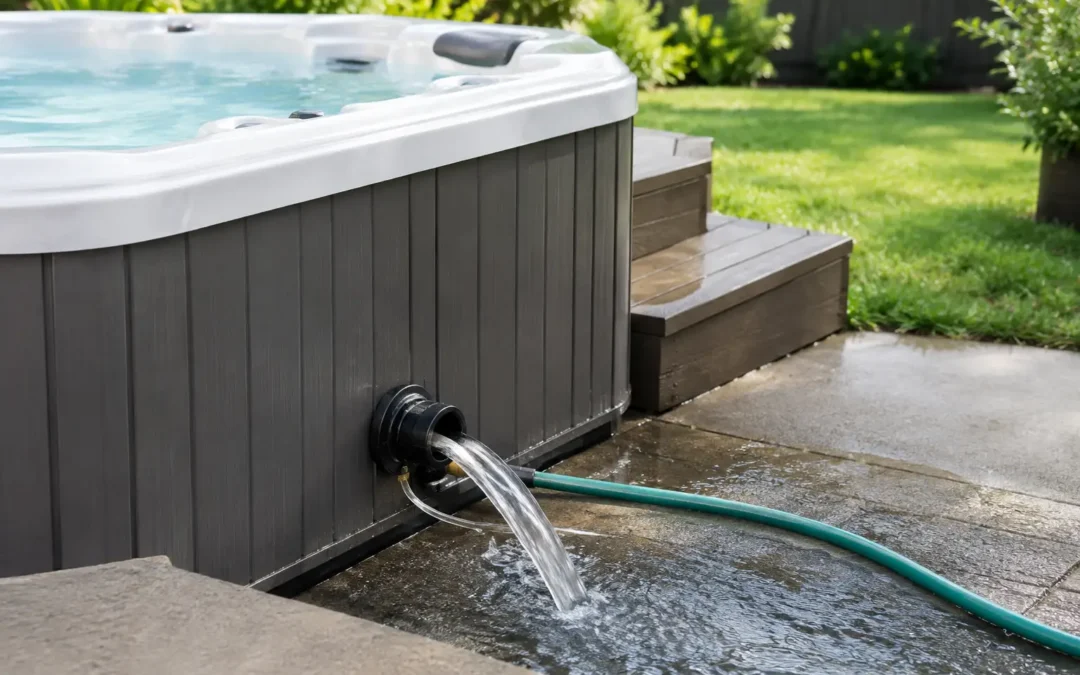
Most hot tubs have a drain valve at the base of the cabinet. It may be behind a removable panel or close to the equipment compartment. Connect a hose securely, run it to your chosen drainage point, then open the valve according to the manufacturer’s instructions. Gravity draining is slow, but it is simple and gives you time to clean as the water level drops.
A submersible pump is often more practical for a full-size family hot tub. Position it in the footwell, with the outlet hose leading safely to the drainage point. Check it from time to time rather than leaving it unattended. Pumps can shift position, hoses can kink, and a surprising amount of water can reach an area very quickly.
Do not attempt to force water out through the jets or operate the hot tub pumps to speed things up. This risks running equipment dry and does not properly clear the plumbing.
Deal with the last few litres carefully
Once the main body of water has drained, there will usually be a small amount left in the footwell and seats. A wet vacuum, small bucket or absorbent towels will remove it safely. This is also a good opportunity to inspect the shell for marks, loose fittings or anything that needs attention before refilling.
If your hot tub has a specific winterisation procedure, follow it exactly. Draining for routine maintenance is not the same as preparing a spa to sit unused through cold weather. Water can remain in pipework even after the shell appears empty, so professional help is wise if you are closing down a hot tub for winter or leaving a property vacant.
Clean while the shell is empty
Use a cleaner designed for acrylic hot tub surfaces and a soft cloth. Household bathroom cleaners, washing-up liquid, bleach and abrasive pads can damage the finish or leave residues that create foam when the tub is refilled.
Wipe the waterline, seats, headrests and footwell, paying attention to areas that are usually below the water. Rinse any cleaner away thoroughly and remove the remaining rinse water with your wet vacuum or cloths.
Take out the filters while the hot tub is empty. Rinse them thoroughly with fresh water, then use a suitable filter cleaner if they need a deeper clean. Filters that remain greasy or blocked make water care harder and reduce jet performance. If a filter is worn, misshapen or no longer comes clean, replacement is usually better value than struggling with poor circulation.
This is also a useful time to wipe the underside of the cover and check its condition. A heavy, waterlogged cover loses insulation and can increase heating costs. Inspect cabinet panels and the area around pumps for obvious signs of moisture, but do not dismantle electrical components yourself.
Refill slowly and protect the plumbing
Place the hose into the filter housing or designated fill pipe where your hot tub manufacturer recommends it. Filling through this route helps push water through the plumbing and can reduce the chance of an air lock.
Use fresh mains water and fill to the level marked inside the spa. Do not overfill it. Once bathers get in, the water level will rise, and an overfilled hot tub can spill into the cabinet or across the surrounding surface.
Before restoring power, check that the filters are refitted correctly, all drain valves are shut and any panels removed for access are secure. Turn the power back on only once the spa has reached the proper fill level.
After the control panel starts up, allow the circulation system to run and check that water is moving normally. If a pump sounds unusually loud, jets are weak or an error message appears, switch the power off and seek advice. Do not repeatedly reset the system in the hope that it will clear an air lock.
Balance the new water before you use it
Fresh water is not automatically ready for a soak. Test the alkalinity and pH first, then adjust them gradually before adding your usual sanitiser. The exact products and order depend on whether you use chlorine, bromine or another water-care system, so follow the dosing guidance for your chosen treatment.
Allow the water to circulate after each adjustment and retest rather than adding several products at once. This measured approach helps prevent cloudy water, scale and irritation. Once the sanitiser level is correct and the water has reached temperature, your hot tub is ready to enjoy again.
For homes across Sussex, Hampshire, Kent and Surrey, Kiwi Spas can help with ongoing water care, servicing and repairs if drainage has uncovered a fault or your spa is becoming difficult to maintain. Good aftercare keeps a quality hot tub enjoyable for years, not just for its first season.
A planned drain is one of the simplest ways to protect your investment. Choose the right drainage point, isolate the power, take your time with the clean, and your next soak will begin with water that looks and feels as inviting as it should.